


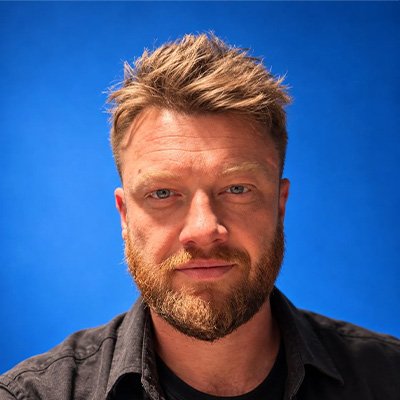
Tim-Ralf Heise
Founder, Rauschwerk VerlagTim-Ralf Heise runs Rauschwerk Verlag in Berlin, developing selected nonfiction books with authors from their knowledge, notes and experience.
I founded Rauschwerk Verlag in Berlin to help people turn what they know into books. Someone can have years of experience worth sharing and still need help shaping a manuscript. I want that person to have a way into publishing through their material and willingness to collaborate, even when they cannot pay for book production.
Writing has been part of my life since childhood. I wrote and recorded audio dramas, then began writing longer texts by hand to work through my own experiences. When I wanted to publish, I started blogs. Studying cultural studies, with a strong focus on literature, gave me more ways to understand and develop texts. I enjoyed academic writing and began working as a ghostwriter while continuing to publish my own writing.
My next step was copywriting and marketing. I discovered that I was strongest when words helped someone understand an offer and decide to buy. I stayed in sales and now work as a Sales Manager. Alongside that career, I trained as a hypnotist, inspired by a literature professor I admire. Writing and selling have both shaped the publisher I am building.
I have been writing books for roughly ten years. AI gave me more room to put my ideas into practice on a smaller budget. The change was practical: I could do more with the resources I had. It also made me reconsider who else could benefit from that combination of writing craft and technical help.
One experience sharpened the direction. I wanted to develop my skills and came across coaching programmes charging five-figure fees for knowledge about the craft. That price raised a question for me: why should someone need that much money to learn how to develop their ideas? Rauschwerk became my way of offering support through a different publishing model.
For projects we accept, the publisher covers the agreed production costs. Authors receive 80% of the revenue that reaches the publisher. They contribute their knowledge and time, answer questions, and work with us on the book. A finished manuscript is not required for the first conversation. Notes or recorded thoughts can give us enough material to begin finding a direction. Paid services are a separate route; buying one does not buy a place in our publishing programme.
The conversation is where I do much of my editorial work. I ask for specific situations and details, then help the author develop a concept that readers can follow. Our programme focuses on nonfiction books, guides and practical instructions. We look for the purpose that holds the material together and the people who could use it. The author remains involved as that purpose becomes a manuscript.
AI helps me organise material and work on language. I first read what an author has provided, and I return to it when checking suggestions. A model can shift the emphasis or leave out something important. I have to notice that and decide with the author how to proceed. Questions and small writing tasks also help authors develop their own ability to tell their story.
Marketing belongs in that conversation too. Our Rauschwerk-Methode brings together several influences and our own additions. We work out who the book is for and how its title and cover can make its value understandable. That thinking guides the presentation without replacing the substance of the book.
I am building clearer processes around these collaborations. The next stage is a more selective approach to projects that fit the publisher. My aim is to make this craft accessible to people who have something worth passing on. For another founder starting out, my advice is to understand the material people already bring you. Build your offer around helping them make something useful from it.
More founder stories
Kitforge builds configuration packs that make AI coding agents reliable. Practical, tested setups for Claude Code and Cursor.
Read their storyFounder of OpenFate, building multilingual self-discovery tools that separate deterministic chart calculation from AI interpretation.
Read their storyI build tools for people who write with AI and then have to defend that writing to someone who assumes they cheated.
Read their story